Healthcare · 9 min read
Designing Better Mental Health Clinics
One of the most rigorous studies in healthcare design did not test a new treatment. It tested a building — and found that the environment itself was linked to less aggression and less need for restraint.
The Swedish ward study
Ulrich and colleagues (2018) compared a new psychiatric hospital in Sweden with the older facility it replaced. The new building used features drawn from stress-reduction research: single rooms with private bathrooms, movable seating in common areas, garden access, views of nature, daylight, lower noise and good sightlines for staff.
After the move, the researchers recorded fewer incidents in which patients had to be restrained or injected against their will. The authors are careful that one hospital cannot prove everything. Still, the direction is hard to ignore: the environment is part of the care.
Choice as a clinical material
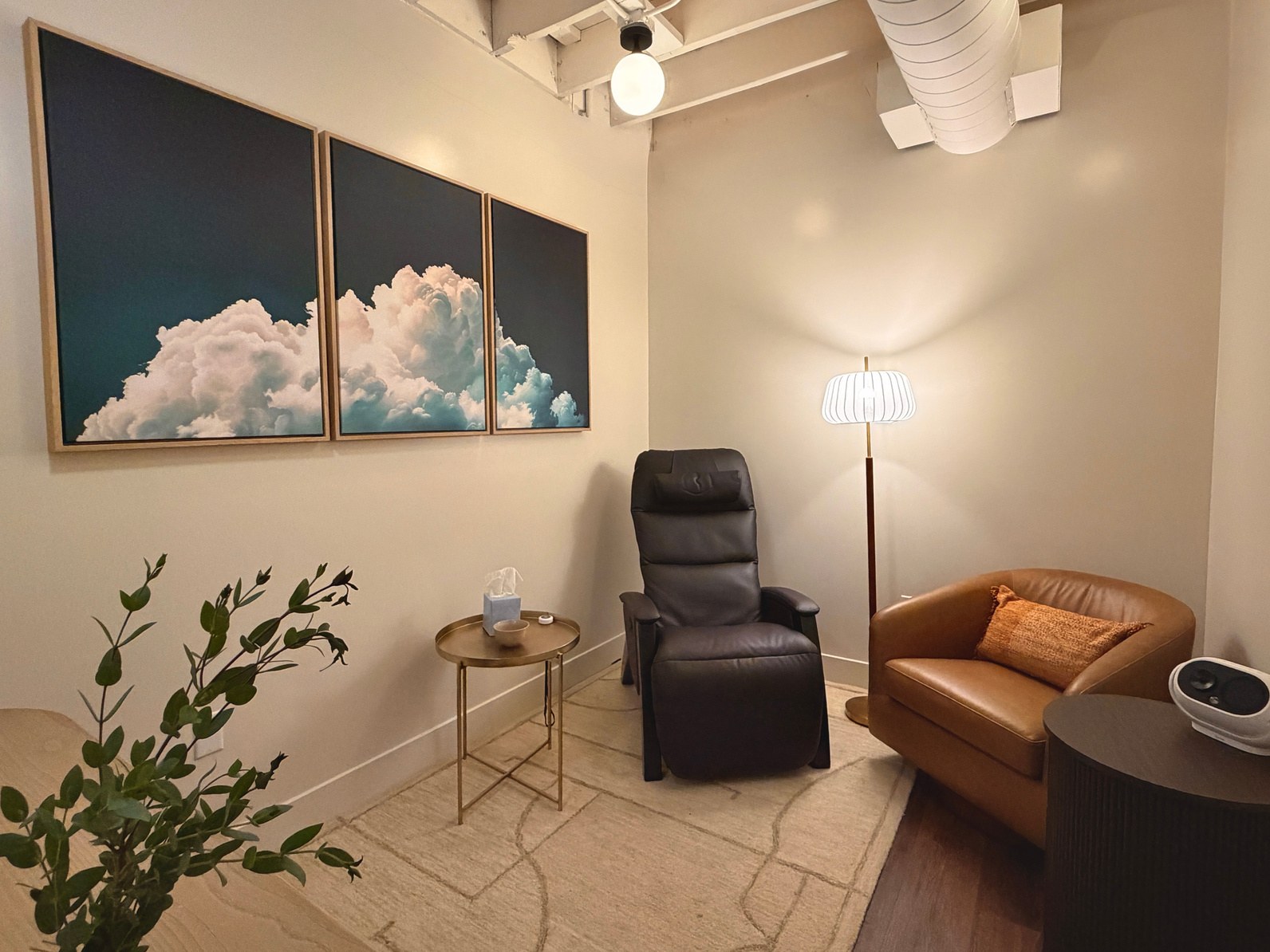
Ulrich's earlier 'supportive design' theory named three things that lower stress in healthcare settings: a sense of control, access to social support, and positive distraction. Control is the one most often designed out. Bolted rows of chairs, one fixed brightness of overhead light and a single route through reception all tell a person that nothing here is theirs to adjust.
Reintroducing choice rarely costs much. Mix single chairs with pairs. Vary distance and orientation. Add a lamp people can turn on. Offer a seat that is out of the main line of sight. Each is a small sign of trust.
Art is not decoration here
In a psychiatric setting, Nanda and colleagues (2011) found that realistic nature imagery was associated with fewer as-needed anxiety medications than abstract art or bare walls. The finding is specific: calm, legible, nature-based images, not ambiguous or agitated ones. What goes on a clinic's walls deserves the same care as what goes into its protocols.
For your space
- — Design for control: movable seating, adjustable light, more than one way to wait.
- — Choose artwork on evidence — legible nature scenes over ambiguous abstraction.
- — Plan staff sightlines so supervision does not become exposure.
Sources
- 1.Ulrich, R. S., Bogren, L., Gardiner, S. K. & Lundin, S. (2018). Psychiatric ward design can reduce aggressive behavior. Journal of Environmental Psychology, 57.Fewer coercive incidents after a move to a stress-reducing design.
- 2.Ulrich, R. S. (1991). Effects of interior design on wellness: theory and recent scientific research. Journal of Health Care Interior Design, 3.Supportive design theory.
- 3.Nanda, U., Eisen, S., Zadeh, R. S. & Owen, D. (2011). Effect of visual art on patient anxiety and agitation in a mental health facility. Journal of Psychiatric and Mental Health Nursing, 18(5).Nature imagery and PRN medication use.