Light · 8 min read
Why Light Matters
Light is the only design material that acts directly on the body's clock. That makes it the most underused tool in most interiors — and the most misused.
Sunlight on the recovery ward
Beauchemin and Hays (1996) found that patients hospitalised with severe depression stayed, on average, several days less when assigned to sunny east-facing rooms rather than dim ones. Walch and colleagues (2005) found that spinal surgery patients in brighter rooms reported less stress and used less pain medication than those on the darker side of the same building.
A dedicated light receptor
In the early 2000s scientists confirmed a third type of light-sensing cell in the eye. These cells contain melanopsin, respond most to blue-rich light, and signal the brain's clock rather than forming images. It is the biology behind 'circadian lighting'.
In 2022, Brown and an international panel of experts published the first consensus recommendations. Indoors, they suggest bright, melanopic-rich light during the day; light kept low in the evening, in the hours before sleep; and near-darkness at night. The measure they use is melanopic EDI rather than simple brightness.
Bright is not the same as good
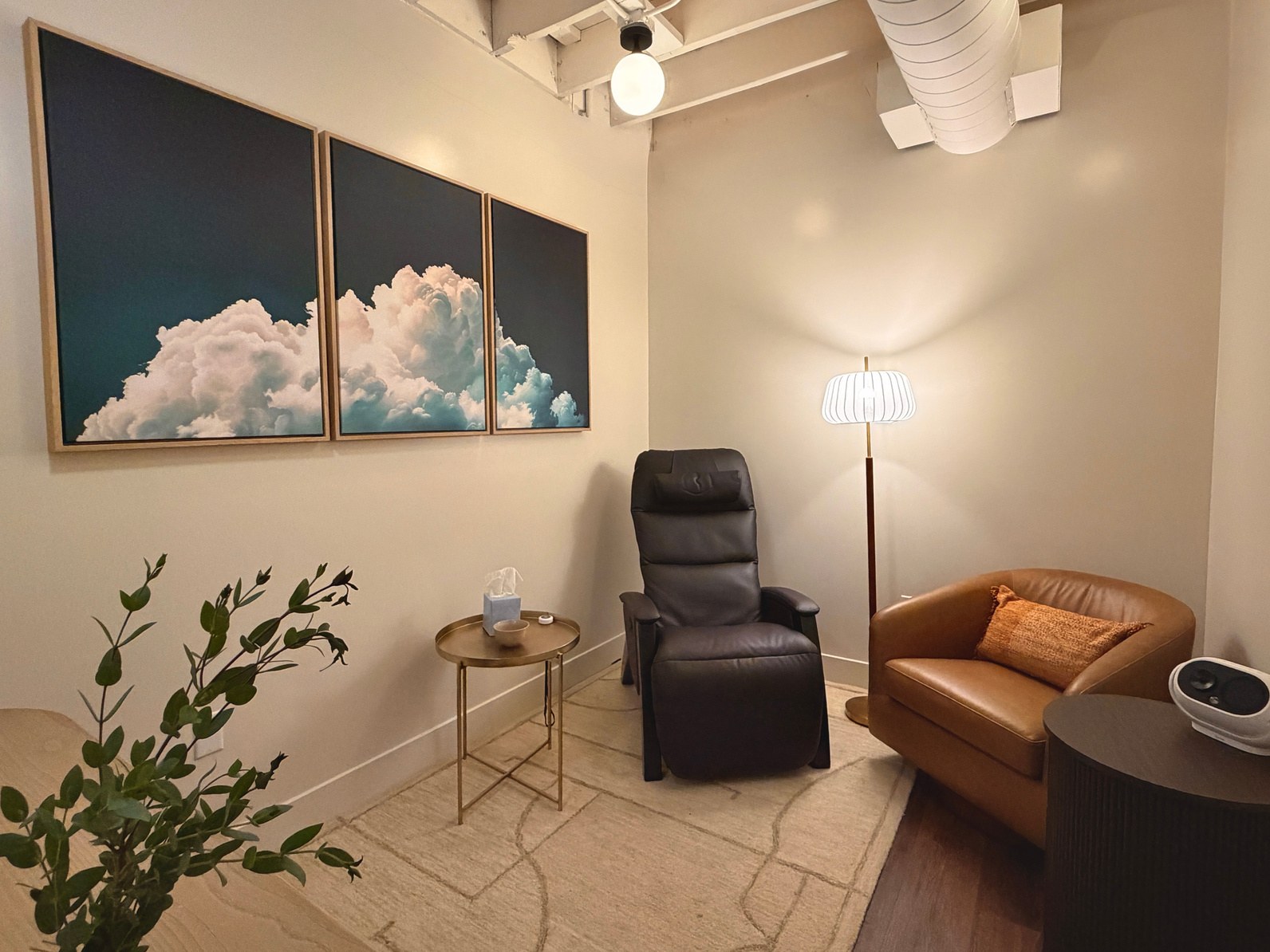
Most clinics fail in both directions at once: flat, glare-heavy overhead light all day, and the same light in the evening. A resolved scheme layers daylight, wall washing and lamps at seated height, and lets the balance shift over the day. Light at eye level also lowers perceived ceiling height and creates refuge. It is a psychological tool as much as a biological one.
For your space
- — Design daylight access first; artificial light second.
- — Plan light by time of day — brighter by day, warm and low by evening.
- — Never rely on a single overhead source in a room where people wait or rest.
Sources
- 1.Beauchemin, K. M. & Hays, P. (1996). Sunny hospital rooms expedite recovery from severe and refractory depressions. Journal of Affective Disorders, 40(1–2).Shorter stays in sunny rooms.
- 2.Walch, J. M. et al. (2005). The effect of sunlight on postoperative analgesic medication use. Psychosomatic Medicine, 67(1).Brighter rooms, less stress and analgesic use.
- 3.Brown, T. M. et al. (2022). Recommendations for daytime, evening, and nighttime indoor light exposure. PLOS Biology, 20(3).Consensus melanopic lighting guidance.